Table of Contents
1. Basic Overview of Industrial Water Tube Boiler
2. Working Principle and Core Structure
3. Common Industrial Water Tube Boiler Types
4. Water Tube vs Fire Tube Boiler Performance Data
5. Core Operational Advantages
6. Industrial Application Scenarios
7. Operation and Maintenance Tips
8. Industry FAQ
Basic Overview of Industrial Water Tube Boiler
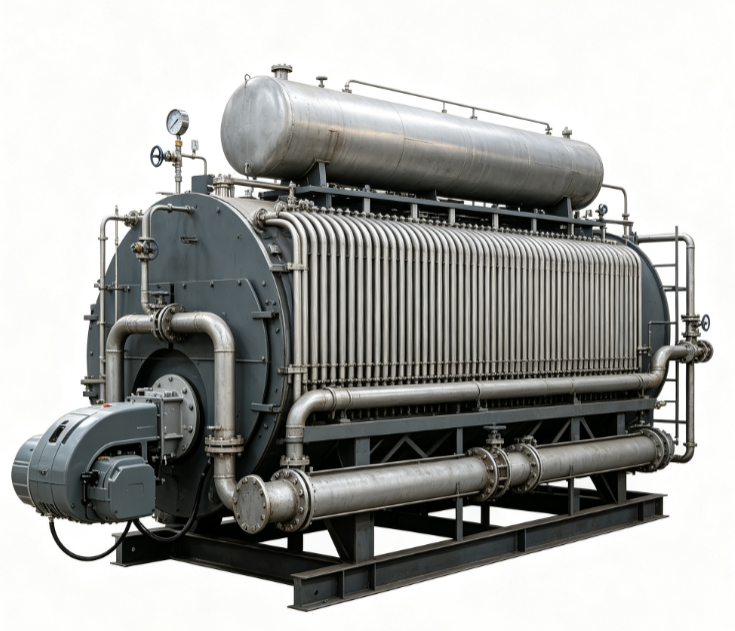
Industrial water tube boiler is a high-pressure industrial heating equipment. It circulates water inside sealed metal tubes while hot flue gas flows outside the tubes.
This structural design is totally different from traditional fire tube boilers. It supports higher pressure and larger steam output for heavy industrial use.
Standard industrial water tube boiler handle steam and hot water supply. It serve factory production lines, heating systems and power generation units.
It fit high-load continuous operation environments. Ordinary fire tube boilers cannot sustain long-hour high-pressure working status.
Verified industrial test data show optimized water tube boiler units reach up to 98% thermal efficiency with full heat recovery accessories.
Working Principle and Core Structure
Water tube boiler operation relies on natural water circulation and heat exchange. The whole working process is stable and controllable.
Cold water fills the internal tube network and upper steam drum. High-temperature flue gas heats the tube surface from outside.
Heated water turns into steam gradually. Steam gathers in the upper drum for industrial output and supply.
Core components include steam drum, water drum, water cooling wall and economizer. These parts form the complete heat circulation system.
Common Industrial Water Tube Boiler Types
Industrial water tube boiler models classify by structure and fuel type. Each type match different industrial load demands.
Gas and Oil Fired Water Tube Boiler
This water tube boiler type use natural gas or diesel as fuel. It has clean combustion and low emission performance.
Most gas-fired models adopt membrane wall design. It improve heat absorption efficiency and reduce heat loss.
Biomass Fired Water Tube Boiler
Biomass water tube boiler burn wood chips and crop residues. It is an eco-friendly industrial heating solution.
It use chain grate combustion structure. It adapt low-calorie biomass fuel stably.
Coal Fired Water Tube Boiler
Coal-fired water tube boiler offer large steam capacity. It suit heavy industry with high energy consumption needs.
It has strong fuel adaptability. It work stably under long-term continuous production loads.
Water Tube vs Fire Tube Boiler Performance Data
Industrial water tube boiler show obvious advantages in efficiency, pressure resistance and load capacity. The table below list verified industry standard data.
Performance Index | Industrial Water Tube Boiler | Fire Tube Boiler |
Basic Thermal Efficiency | 82%–88% | 80%–85% |
Full Accessory Efficiency | 92%–98% | 90%–95% |
Max Working Pressure | Up to 5.3 MPa | Below 1.6 MPa |
Steam Capacity Range | 2–110 t/h | Below 20 t/h |
Flue Gas Temperature | 220–300°C (with economizer) | 320–420°C |
Industrial water tube boiler support super high pressure operation. It meet high-standard steam demands for power and chemical industries.
Equipped with economizer and condenser, water tube boiler greatly reduce flue gas heat waste. It cut long-term fuel consumption costs.
Core Operational Advantages
Industrial water tube boiler have unique strengths for large-scale industrial production.
The tube structure bear pressure evenly. It have lower explosion risk compared with fire tube equipment.
Modular heat recovery system improve energy utilization. It save more fuel in daily operation.
It support flexible load adjustment. It adapt variable production steam demands well.
Easy disassemble structure simplify inspection and repair work. It reduce equipment downtime.
Industrial Application Scenarios
Industrial water tube boiler widely serve multiple heavy industrial fields.
Power generation factories use high-capacity water tube boilers for power supply support.
Chemical and pharmaceutical plants rely on stable high-pressure steam for production processes.
Food processing and textile factories adopt water tube boilers for continuous heating and drying work.
Central heating projects for industrial parks also choose water tube boiler units for large-area heat supply.
Operation and Maintenance Tips
Standard maintenance keep industrial water tube boiler stable and long service life.
Clean tube inner scale regularly. Scale accumulation reduce heat transfer efficiency and cause local overheating.
Check economizer and condenser every month. Blocked accessories lower overall thermal efficiency.
Monitor water quality strictly. Unqualified cooling water lead to tube corrosion and damage.
Do not run the boiler over rated pressure. Overload operation cause structural safety hazards.
Industry FAQ
Q1: What is an industrial water tube boiler?
A: It is a high-pressure industrial boiler. Water flows inside metal tubes and flue gas heats outside, providing high-capacity steam and hot water for industrial production.
Q2: Why choose water tube boiler over fire tube boiler?
A: It support higher working pressure and larger steam capacity. It has higher thermal efficiency and better safety performance for heavy industrial continuous operation.
Q3: What is the maximum efficiency of industrial water tube boiler?
A: With full heat recovery accessories including economizer and condenser, gas-fired water tube boiler can reach 98% thermal efficiency in formal industrial operation.
Q4: What industries use water tube boilers the most?
A: Power generation, chemical processing, textile manufacturing, food production and large-scale industrial park heating systems widely use water tube boiler equipment.