Table of Contents
1. Overview
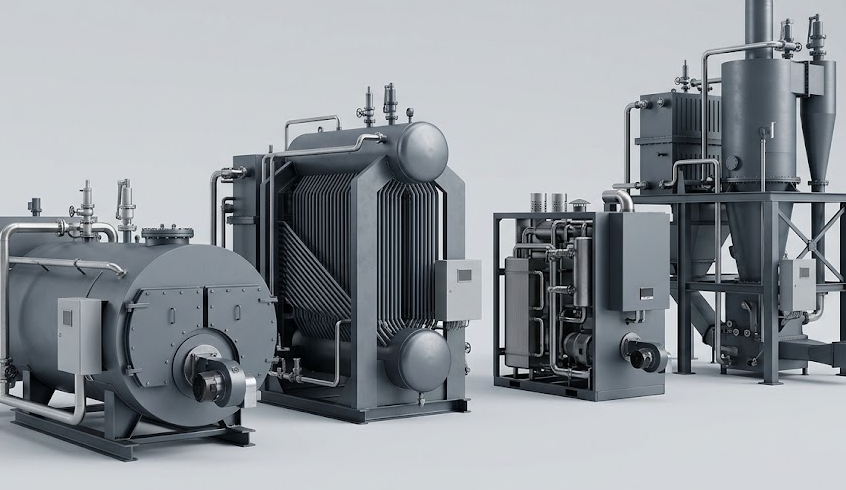
2. Main Types of Industrial Boiler System
3. Industrial Boiler Efficiency Performance Comparison
4. Core System Components
5. Common Industrial Usage Scenarios
6. Frequently Asked Questions
1. Overview
Industrial boiler system is a complete thermal energy generation setup. It convert fuel or electric power into steam and hot water for factory operations.
Industrial steam boiler and hot water boiler units form the core of industrial heating systems. They support production heating, power generation and equipment heat supply.
Different industrial boiler designs match different fuel sources. Gas, coal, biomass and electric power all can drive standard boiler systems.
System efficiency directly affect factory operational cost. High-performance boiler units cut energy waste and lower daily consumption.
2. Main Types of Industrial Boiler System
Industrial boiler system classify by structure and working principle. Each type fit different load demands and working environments.
2.1 Fire Tube Industrial Boiler
Fire tube boiler let flue gas pass through internal tubes. Water surround these heat exchange tubes to absorb thermal energy.
This structure have simple design. It need low maintenance and suit small and medium industrial load demands.
2.2 Water Tube Industrial Boiler
Water tube boiler flow water inside sealed tubes. Flue gas heat the outer tube surface for heat exchange.
It withstand higher pressure and temperature. It work stable for large-scale industrial production lines.
2.3 Condensing Industrial Boiler
Condensing boiler recover waste heat from flue gas. It reuse residual heat to preheat inlet water.
This type have the highest thermal efficiency. It widely used in modern energy-saving factory systems.
3. Industrial Boiler Efficiency Performance Comparison
Verified industrial test data show clear efficiency gaps between mainstream industrial boiler system types. The table below list core performance indicators for reference.
Boiler System Type | Full Load Thermal Efficiency | Part Load Thermal Efficiency | Main Feature |
Standard Fire Tube Boiler | 80% – 85% | 75% – 80% | Low cost, simple structure |
Standard Water Tube Boiler | 82% – 88% | 78% – 83% | High pressure resistance |
Condensing Gas Boiler | 94% – 98.5% | 90% – 93% | Ultra-low energy loss |
Fluidized Bed Boiler | 85% – 92% | 80% – 86% | Multi-fuel adaptability |
Condensing industrial boiler system deliver the best energy-saving effect. It reuse flue gas latent heat that traditional boilers waste completely.
Fire tube boilers lose more efficiency under part load. Small factories with unstable load have higher energy consumption with this model.
Water tube boilers maintain steady performance at high pressure. It is the preferred choice for heavy-duty industrial production.
4. Core System Components
A complete industrial boiler system consist of multiple supporting parts. Every component ensure stable and safe operation.
Boiler body is the main heat exchange unit. It finish fuel combustion and water heating process.
Economizer and air preheater assist heat recovery. They improve overall system thermal efficiency effectively.
Control panel and safety valves monitor real-time pressure and temperature. It prevent overpressure and overheating risks.
Flue gas treatment device reduce exhaust emissions. It make the system meet industrial environmental standards.
5. Common Industrial Usage Scenarios
Industrial boiler system support a wide range of industrial production fields.
Food processing factories use steam boiler systems. It provide high-temperature steam for sterilization and product processing.
Textile and printing factories rely on hot water boilers. It supply stable heat for fabric drying and color fixing.
Chemical plants adopt high-pressure water tube boilers. It match high-temperature and high-pressure reaction needs.
Building heating and central energy stations use condensing boiler systems. It reduce long-term heating energy costs.
6. Frequently Asked Questions
Q1: Which industrial boiler system has the highest efficiency?
A1: Condensing gas boiler systems have the top efficiency, ranging from 94% to 98.5% under full load. It recover wasted flue gas heat to cut energy loss greatly.
Q2: What is the difference between fire tube and water tube boilers?
A2: Fire tube boilers have simple structure and low cost for small loads. Water tube boilers resist higher pressure and fit large-scale, high-load industrial production.
Q3: Why part load efficiency is lower than full load efficiency?
A3: Boilers produce more cycling heat loss at low load. Frequent startup and purging waste extra thermal energy and reduce overall efficiency.
Q4: What industries need high-pressure industrial boiler systems?
A4: Chemical manufacturing, power generation and large pharmaceutical factories need high-pressure water tube boiler systems to support high-temperature production processes.