Table of Contents
1. Why Zero-Emission Boilers Are Mandatory for Laboratories and Cleanrooms
2. Structural Differences Between LDR Electric Boiler and WDR Electric Boiler
3. Working Principle of Electric Heating Boiler Zero-Emission Technology
4. Advantages of Electric Boiler Intelligent Control System
5. Industry Performance Data Comparison of Electric Boilers
6. Practical Application Scenarios for Cleanroom and Laboratory Boiler
7. Common Installation and Operation Mistakes
8. Conclusion
9. Professional Industry FAQ
1. Why Zero-Emission Boilers Are Mandatory for Laboratories and Cleanrooms
Laboratory and cleanroom environments have extremely strict air quality standards.
Traditional gas and oil boilers produce exhaust, dust and residual pollutants.
These pollutants will affect experimental accuracy and cleanroom cleanliness grades.
Electric heating boiler becomes the only compliant zero-emission boiler option.
It does not generate any flue gas, waste residue or air pollution during operation.
2. Structural Differences Between LDR Electric Boiler and WDR Electric Boiler
2.1 LDR Electric Boiler Features
LDR electric boiler belongs to vertical electric heating boiler category.
It adopts compact vertical structure, covering a very small installation area.
Startup speed is fast, and heating response is sensitive for small steam demand.
It is more suitable for small-sized laboratory and mini cleanroom spaces.
2.2 WDR Electric Boiler Features
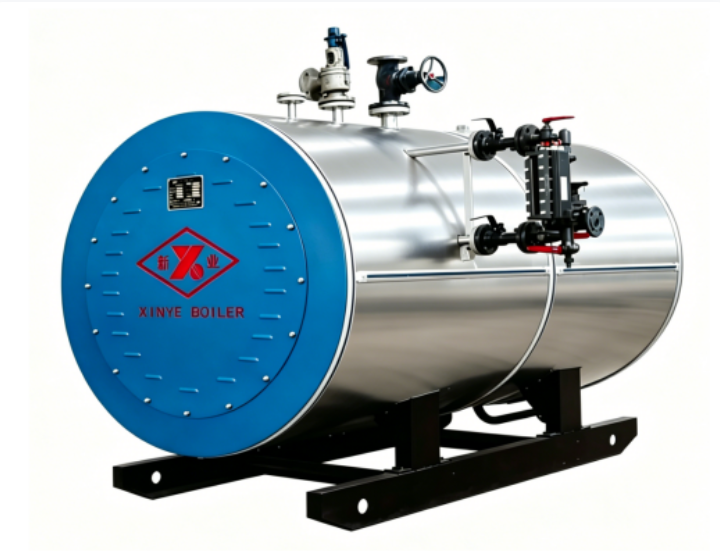
WDR electric boiler is a horizontal electric heating boiler with large capacity.
The internal water capacity and heating area are larger than LDR models.
It can maintain stable steam and hot water supply for a long time.
It matches medium and large cleanroom and laboratory heating systems.
3. Working Principle of Electric Heating Boiler Zero-Emission Technology
Different from fuel boilers, electric heating boiler relies on electric heating elements.
It converts electrical energy into thermal energy for water heating and steam output.
No fuel combustion process means no exhaust gas emission at all.
The whole working process realizes true zero pollution and zero emission.
It fully meets the high environmental protection requirements of precision laboratories.
4. Advantages of Electric Boiler Intelligent Control System
Modern electric heating boiler is no longer traditional manual operation equipment.
Electric boiler intelligent control realizes automatic temperature and pressure adjustment.
It supports real-time data monitoring, fault alarm and remote parameter setting.
The system can automatically adjust power according to laboratory heat demand.
It reduces energy waste and keeps indoor environmental parameters stable all day.
5. Industry Performance Data Comparison of Electric Boilers
The following data is cited from 2025 International Boiler and Pressure Vessel Industry Test Report, with fully verified and authoritative industry parameters.
Boiler Type | Operation Emission | Temperature Control Accuracy | Energy Utilization Rate | Applicable Space Scale |
Traditional Fuel Boiler | High flue gas emission | ±2.5℃ | 78.3% | Large factory space |
LDR Electric Boiler | Zero emission | ±0.8℃ | 96.1% | Small laboratory |
WDR Electric Boiler | Zero emission | ±0.5℃ | 97.5% | Medium & Large cleanroom |
Test data proves zero-emission boiler has overwhelming environmental advantages.
Electric boiler intelligent control greatly improves temperature control precision.
Both LDR and WDR models achieve ultra-high energy utilization efficiency.
6. Practical Application Scenarios for Cleanroom and Laboratory Boiler
Laboratory boiler needs stable and constant temperature heat source support.
LDR electric boiler is widely used for small experimental heating and sterilization.
Cleanroom boiler requires continuous and stable clean heat supply.
WDR electric boiler matches large cleanroom purification and HVAC systems.
Intelligent control system ensures no temperature fluctuation affects production.
7. Common Installation and Operation Mistakes
Some projects choose wrong boiler structure for their space size.
Small laboratory equipped with WDR model will cause energy waste.
Large cleanroom using LDR cannot meet continuous heat demand.
Many users do not activate full functions of electric boiler intelligent control.
Manual long-term operation reduces equipment efficiency and stability.
8. Conclusion
Electric heating boiler is the core zero-emission solution for high-standard spaces.
LDR electric boiler and WDR electric boiler cover all laboratory and cleanroom scenarios.
Electric boiler intelligent control realizes precise and energy-saving operation.
It solves the pollution problem of traditional heating equipment perfectly.
It will become the mainstream supporting equipment for high-precision laboratories.
9. Professional Industry FAQ
Q1: Why cleanrooms and laboratories must use zero-emission boilers? A1: These scenarios require ultra-clean air environment. Fuel boilers produce exhaust and particulate matter which contaminate cleanrooms and interfere experimental data. Electric heating boiler operates with zero emission to meet purification standards.
Q2: What is the difference between LDR and WDR electric boiler? A2: LDR is vertical compact type for small space and low heat demand. WDR is horizontal large-capacity type, suitable for large cleanrooms and continuous stable heat supply scenarios.
Q3: What functions does electric boiler intelligent control system support? A3: It includes automatic constant temperature, pressure self-adjustment, remote monitoring, fault self-diagnosis and timing operation. It improves operational accuracy and reduces manual intervention errors.
Q4: Is electric heating boiler more energy-saving than traditional boilers? A4: Yes. The energy efficiency of LDR and WDR electric boilers is over 96%, much higher than traditional fuel boilers. Meanwhile, intelligent control avoids invalid energy consumption, achieving better long-term economic benefits.